How Can You Extend the Service Life of an Industrial Hose?
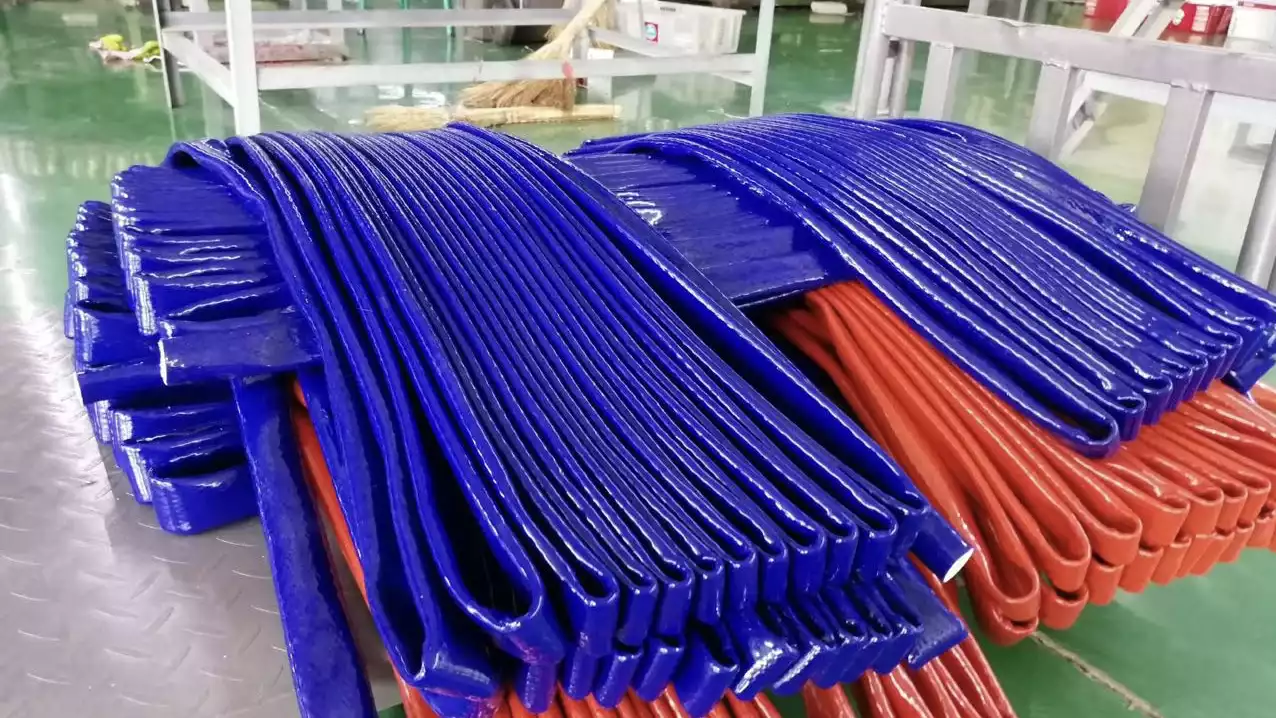
An industrial hose lasts longer when pressure, temperature, chemical compatibility, bend radius, abrasion, coupling condition, and storage are controlled together. ISO 8331:2016 covers hose selection, storage, use, and maintenance, while ISO 6803:2017 addresses hydraulic-pressure impulse testing above 3 MPa and from 1.5 to 3 MPa. A hose should operate within the manufacturer’s rated pressure and temperature range, never from its burst-pressure figure. Keep bends above the specified minimum radius, prevent twisting, protect high-wear areas, inspect fittings and covers on a fixed schedule, and replace assemblies showing reinforcement exposure, bulging, leakage, permanent kinks, or coupling movement.
Service life starts with specification. A hose carrying water at 6 bar and 25°C faces a very different aging pattern from one carrying oil at 20 bar and 100°C, even when both have the same 25 mm inside diameter. Pressure rating, fluid chemistry, temperature, vacuum level, hose movement, and surrounding equipment should therefore be checked before material or reinforcement style is selected.
Chemical compatibility deserves equal attention because the inner tube remains in contact with the conveyed medium for most of its operating life. NBR, EPDM, UHMWPE, PTFE, and other tube materials do not react equally to oils, acids, fuels, steam, solvents, or cleaning chemicals; a compound suitable at 20°C may become less suitable when the same fluid reaches 80°C.
ISO 8331:2016 was written specifically to help rubber and plastics hose assemblies remain close to their received condition before use and reach their expected service life. The standard covers selection, storage, use, and maintenance rather than treating hose condition as an installation-only issue.
Pressure should be checked at the hose during real machine operation, not estimated only from the pump nameplate. A system that normally reads 150 bar can still produce much higher short pressure peaks when a valve closes quickly, a cylinder reaches the end of its stroke, or flow is suddenly restricted; repeated peaks accelerate fatigue in textile or steel reinforcement.
Burst pressure should not be used as the normal operating target. Hydraulic hose specifications commonly separate working pressure from proof and burst values because they serve different purposes, while ISO 6803:2017 tests assemblies under repeated hydraulic pressure impulses and separates high-pressure testing above 3 MPa from lower-pressure testing between 1.5 and 3 MPa.
| Operating item | What to record | Why it matters |
|---|---|---|
| Pressure | Normal, maximum, surge pressure | Repeated peaks fatigue reinforcement |
| Temperature | Fluid and ambient °C | Heat changes rubber and polymer aging rates |
| Bend radius | Manufacturer minimum, actual radius | Tight bends concentrate stress |
| Motion | Cycles per hour or shift | Repeated flexing shortens fatigue life |
| Medium | Chemical name and concentration | Compatibility can change with concentration |
| Inspection | Date and observed condition | Records show recurring wear locations |
Temperature then has to be considered with pressure rather than separately. A hose rated for a certain working pressure at 20°C may require different limits at elevated temperatures depending on its construction, so the manufacturer’s pressure-temperature information should be followed instead of assuming the room-temperature rating remains unchanged at 100°C.
Heat can also come from outside the hose. Exhaust manifolds, furnaces, boilers, hot process piping, engine compartments, and radiant-heating equipment may expose an otherwise suitable hose to temperatures well above the surrounding room temperature; routing it only 50 mm farther from a hot surface can sometimes change its thermal exposure substantially, although the acceptable distance has to be established for the actual equipment.
Where rerouting cannot provide adequate separation, a high temperature fire sleeve can be installed around suitable hose assemblies to reduce exposure to radiant heat, hot surfaces, and molten-metal splash in applications where the sleeve manufacturer approves the service conditions. Sleeve temperature ratings, wall construction, overlap at the ends, clamps, and fitting coverage should be checked rather than assuming every sleeve provides the same protection.
Bending comes next because pressure-resistant reinforcement still deteriorates when repeatedly folded below its specified radius. A 25 mm hose may have a substantially different minimum bend radius from another 25 mm hose with a different reinforcement design, so inside diameter alone cannot be used to decide how tightly an assembly can turn around a machine frame.
The bend should not begin immediately behind the coupling. A fitting creates a relatively stiff section, and forcing a sharp bend within the first few centimetres beside it concentrates flexing at the hose-to-fitting transition; Gates’ 2025 hydraulic safety guidance lists increased hose length, a larger bend radius, bend restrictors, and correct crimping among responses to failures near couplings.
Twisting produces another form of mechanical stress. A hose installed with even a partial axial twist may try to straighten each time it is pressurized, while a moving machine can add thousands of torsional cycles over a working week; swivels, correctly oriented elbow fittings, and a visible longitudinal reference mark make installation errors easier to detect before the equipment enters regular service.
Abrasion often becomes the next limit after routing is improved. A hose rubbing against a steel frame 30 times per minute sees about 14,400 contact cycles during an 8-hour shift, so a small contact point can wear through the cover long before the full hose body shows similar aging.
Once reinforcement becomes visible, the condition is no longer ordinary cosmetic wear. Gates’ 2025 troubleshooting guidance recommends rerouting away from abrasive sources or using a protective sleeve when abrasion is present.
Protective spiral wrap, abrasion sleeves, rollers, clamps, reels, or routing changes work best when placed at known contact points. Protection should not hold moisture or chemicals against steel reinforcement, and clamps should support the hose without crushing it; inspection should include the 50–150 mm regions near fittings, where movement and stress are often concentrated.
Coupling quality has to match the same level of control. Hose, stem, ferrule, clamp, and crimp dimensions should come from an approved assembly system because an incorrect crimp can be too loose to retain the fitting or too tight and damage the tube or reinforcement before the hose has completed even 1 operating shift.
Inspection intervals should reflect service severity rather than one calendar rule for every hose. A transfer hose used 10 minutes per week in a clean indoor area does not need the same attention as an assembly flexing 20 cycles per minute beside hot equipment, where 9,600 movement cycles can accumulate during a single 8-hour shift.
A practical inspection record can stay short:
-
Check for cover cuts, flat spots, blisters, cracks, kinks, leakage, exposed wire, and fitting corrosion.
-
Mark the date, machine position, hose identification number, and operating hours.
-
Compare repeated wear at the same location after 30, 60, or 90 days.
-
Remove assemblies with coupling movement, deep cuts into reinforcement, permanent deformation, or unexplained leakage from service for assessment.
Cleaning practice also affects service life because flushing chemicals can damage a hose that was perfectly compatible with the product it normally carried. Cleaning fluid concentration, contact time, temperature, and pressure should remain within the hose manufacturer’s limits; a 2% cleaning solution at 40°C and the same chemistry at 90°C should not automatically be treated as equivalent exposure.
Storage matters before installation as well. ISO 2230 was revised in March 2026, replacing the 2002 edition, and now provides updated guidance covering inspection, recording, packaging, and storage of vulcanized and thermoplastic rubber products before they enter service.
Spare hoses should stay dry, clean, protected from sunlight, excessive heat, ozone-producing equipment, chemicals, crushing, and unnecessarily tight coils. Stock rotation by manufacturing or receipt date also prevents a hose bought in 2026 from remaining behind newer inventory for several years without anyone reviewing its condition.
Maintenance records make replacement intervals more accurate. If 12 assemblies installed on the same machine show cover wear after an average of 7 months, changing the routing or adding abrasion protection provides more information than simply replacing every hose on a fixed 6-month schedule; the same records can show whether a new installation reaches 12, 18, or 24 months under comparable operating conditions.
A useful hose record needs only a few fields: hose type, size, assembly date, installation date, operating pressure, maximum temperature, conveyed medium, fitting specification, inspection dates, damage location, and removal reason. When the same failure location appears repeatedly, the installation should be reviewed before another identical assembly is fitted.
Service conditions should also be checked after equipment modifications. Raising pump pressure by 15%, increasing fluid temperature from 60°C to 90°C, changing from mineral oil to another process fluid, increasing machine cycle rate, or moving a hose nearer to a heat source can make an earlier hose specification unsuitable even though the hose part number has not changed.
Operators can catch many changes between formal inspections. A new leak, hose movement at a fitting, unusual stiffness, a flattened bend, abrasion dust, or a visible reinforcement strand can be reported during the same shift, while waiting for a 30-day maintenance inspection allows additional pressure and movement cycles to accumulate on an already damaged assembly.